

Citizen, Asterisk
An army recruitment sign in Mexico City said you had to be Mexican by birth to enlist. That sent me into the surprisingly particular world of how Mexico decides who is Mexican, and what kind.

El mexicano no quiere ser ni indio ni español. Tampoco quiere descender de ellos. Los niega.
The Mexican wants to be neither Indian nor Spanish. Nor does he want to descend from them. He denies them.
— Octavio Paz, El Laberinto de la Soledad
I was walking through Mexico City when I passed an army recruitment booth. The banner listed the requirements to enlist, and the first line was that you had to be Mexican by birth. Not Mexican. Mexican by birth. I had never seen a country draw that line so openly on a street-corner sign, and it sent me down a few days of reading about how Mexican nationality actually works. It turns out to be more interesting, and more particular, than I expected.
Two ways to be Mexican
Mexico, like most countries, lets you become Mexican by birth or by naturalization. The birth rules are unusually generous. Anyone born on Mexican soil is Mexican, regardless of their parents’ nationality or immigration status. This has been the rule since a 1934 reform and it has no asterisks. Born on a Mexican ship or aircraft counts too. So does being born abroad to at least one Mexican parent, though that transmission generally stops after one generation born outside the country; the grandchildren of Mexicans born abroad are not automatically Mexican unless a parent was.
Naturalization is the other route, and the timelines reward connection to the country. The default is five years of legal residency before you can apply. It drops to two years if you are the direct descendant of a Mexican by birth, if you marry a Mexican, if you have a Mexican child, or if you are a national of another Latin American or Iberian country. It drops to one year if you are adopted by a Mexican, and for certain minors who are second-generation descendants or under the guardianship of a Mexican. In every case you renounce your other nationality, swear an oath, prove you speak Spanish, and pass an exam on Mexican history and culture. The fee runs around 9,500 pesos.
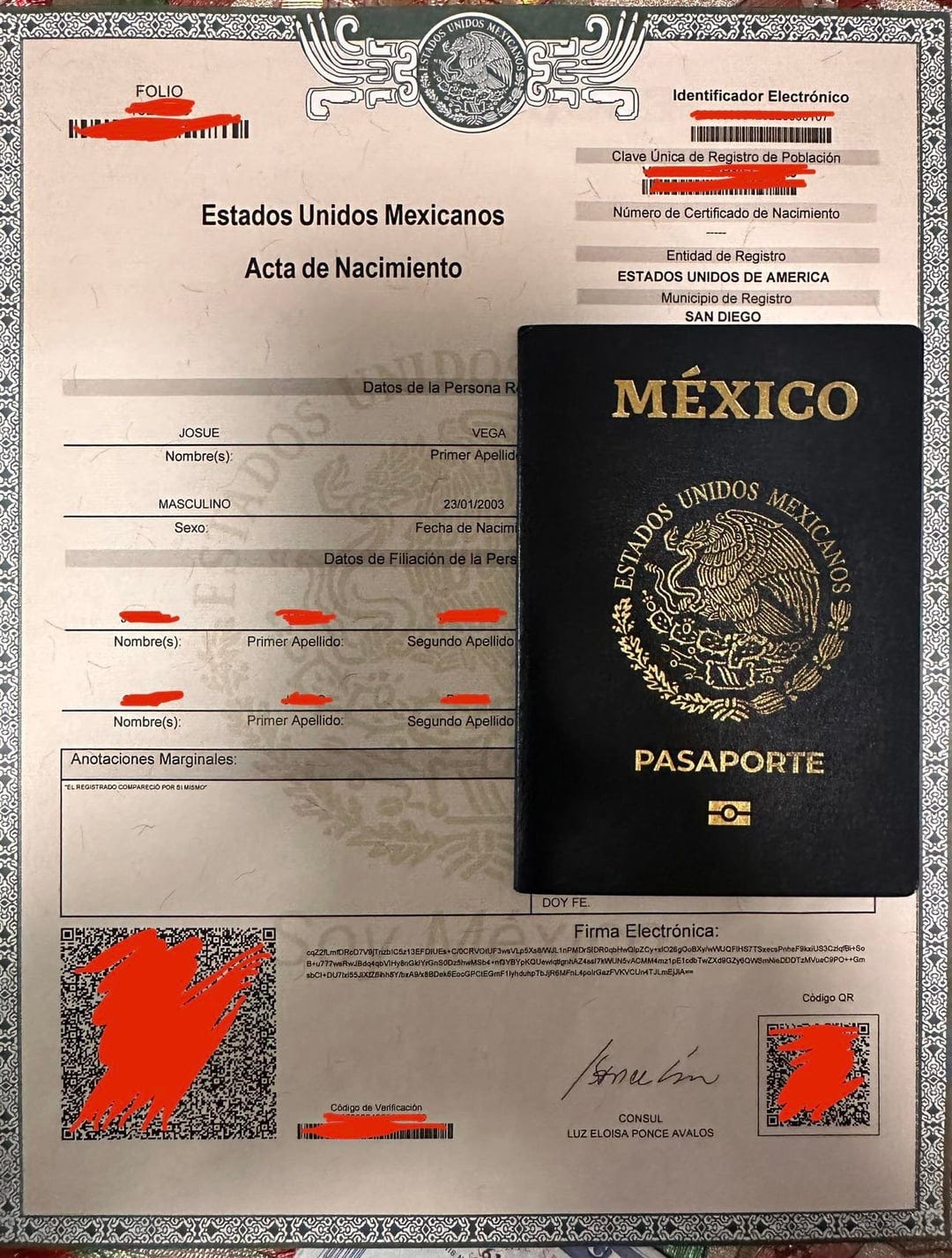
Nationality and citizenship are not the same thing
This is the distinction that English speakers tend to miss, because we use the two words interchangeably. Mexican law does not. Nationality is your membership in the nation. Citizenship is a narrower status layered on top: you are a citizen if you are a national who is at least eighteen and, in the language of Article 34, has “an honest way of living.” Nationality makes you Mexican. Citizenship gives you the political rights, voting chief among them, and the political duties.
The reason this matters is that the two can be gained and lost on completely different terms, and the rules change depending on whether you were born Mexican or became Mexican.

What only birth citizens can do
This is where that recruitment sign comes from. Article 32 of the Constitution reserves a long list of roles for Mexicans by birth. In peacetime no foreigner may serve in the Army, the police, or public security forces. To belong to the Navy or the Air Force, or to hold any commission in them, you must be Mexican by birth. The same is required to be a captain, pilot, master, engineer, or mechanic, or in fact any crew member, on a ship flying the Mexican merchant flag. The same to be a port captain.
The logic, when you trace it back, is about loyalty in the institutions a foreign power might try to turn. The military, the security forces, the ships and ports. The framers of the 1917 Constitution had watched foreigners interfere in Mexican affairs for a century and wrote the document to keep certain levers in native hands. Naturalized citizens, never entirely free of the suspicion attached to the foreigner they used to be, were left on the wrong side of that line for these specific roles. Beyond the military, the same “by birth” requirement guards the highest political offices, the presidency among them.

The draft is for everyone, the Navy is not
Here is the wrinkle that first caught my attention. Military service is an obligation of all Mexicans, by birth or naturalization. Every man is required to register for the Servicio Militar Nacional in the year he turns eighteen, enter the lottery, and carry the cartilla, the service card you need for ordinary paperwork like a passport. A naturalized man is bound by this the same as anyone else.
But the roles he is barred from, the Navy, the Air Force, the merchant marine officer posts, are the ones Article 32 closes to anyone not born Mexican. So the obligation to serve falls on him fully while parts of the institution remain closed to him. In practice the draft today is mostly a year of Saturday civic activities rather than combat deployment, so the contradiction is more on paper than in life. But it is a real one. And the exemptions add their own twist: dual nationals and naturalized citizens over forty are among those excused, so even the obligation is not applied evenly.
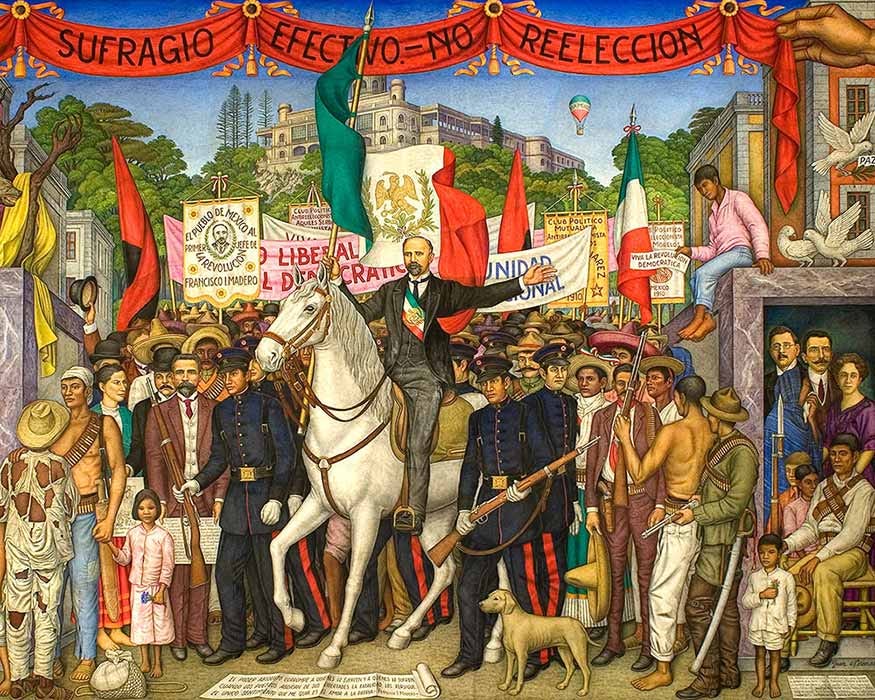
Can you lose it? Depends which “it.”
This was the part I found genuinely confusing at first, because the answer is both yes and no depending on what you are asking about. It clears up once you hold the three concepts apart.
Nationality by birth cannot be taken. Article 37 is absolute on this. A Mexican by birth keeps their nationality no matter what, even if they acquire other passports, even if they leave forever. Dual nationality is their right.
Nationality by naturalization can be taken. The same naturalized person who renounced their old nationality to get in is barred from holding another, and can lose their Mexican nationality by acquiring one, or simply by living outside Mexico for five continuous years. The five years abroad that would not touch a birth citizen can erase a naturalized one.
Citizenship, the political layer, can be suspended for anyone. Article 38 lets the state suspend citizenship rights, voting and the rest, for reasons ranging from criminal prosecution to failing certain civic obligations. That is separate from nationality. A person can be a national without, at a given moment, holding active citizenship rights. So when you ask whether a Mexican can “lose their citizenship,” the honest answer is that birth nationality is permanent, naturalized nationality is conditional, and citizenship rights are suspendable, and the three are not the same thing.
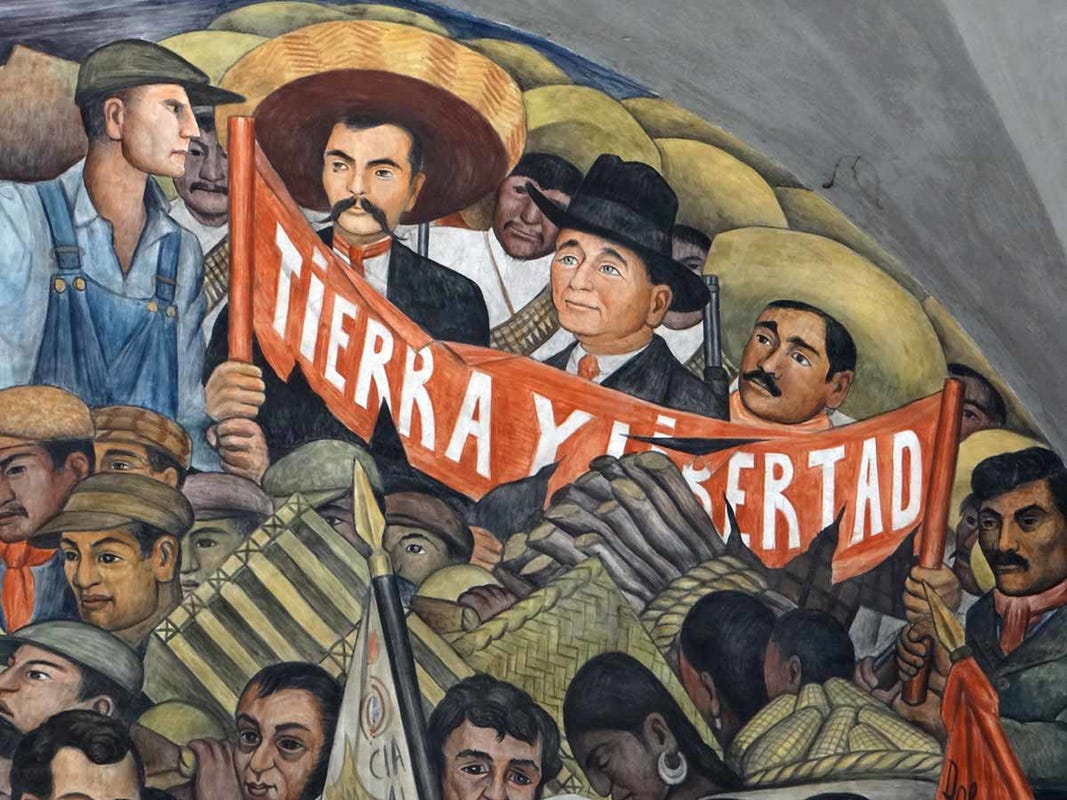
Article 33, the old hammer
One more provision is worth knowing, because it sits behind the whole structure. Article 33 defines foreigners and then gives the President a striking power over them:
“the Federal Executive shall have the exclusive power to compel any foreigner whose remaining he may deem inexpedient to abandon the national territory immediately and without the necessity of previous legal action.”
Expulsion, at the President’s discretion, with no trial. Mexicans jokingly call it being “thirty-three’d.” It is rarely used now and its scope is debated, but it remains on the books, a reminder of how sharply the Constitution once separated the foreigner from the citizen. The naturalized Mexican has crossed out of Article 33’s reach. But the architecture that produced it, the long Mexican wariness of outside hands in domestic affairs, is the same architecture that put “by birth” on that recruitment banner.

The sign, in context
So the banner that stopped me was not an oddity. It was the visible edge of a system that is genuinely welcoming at the threshold and genuinely particular about what comes after. Mexico will grant nationality to a child born on its soil to parents passing through. It will naturalize a five-year resident who learns the language and the history. And it will still, in its founding document, hold a handful of roles, the ones closest to the state’s own security, for the people who were Mexican from their first breath. Both things are true at once. That is what made the sign worth a second look.