

Will we make it in time?
Everyone is racing to get their AI slop product to market. Will you be done with yours before the window closes?

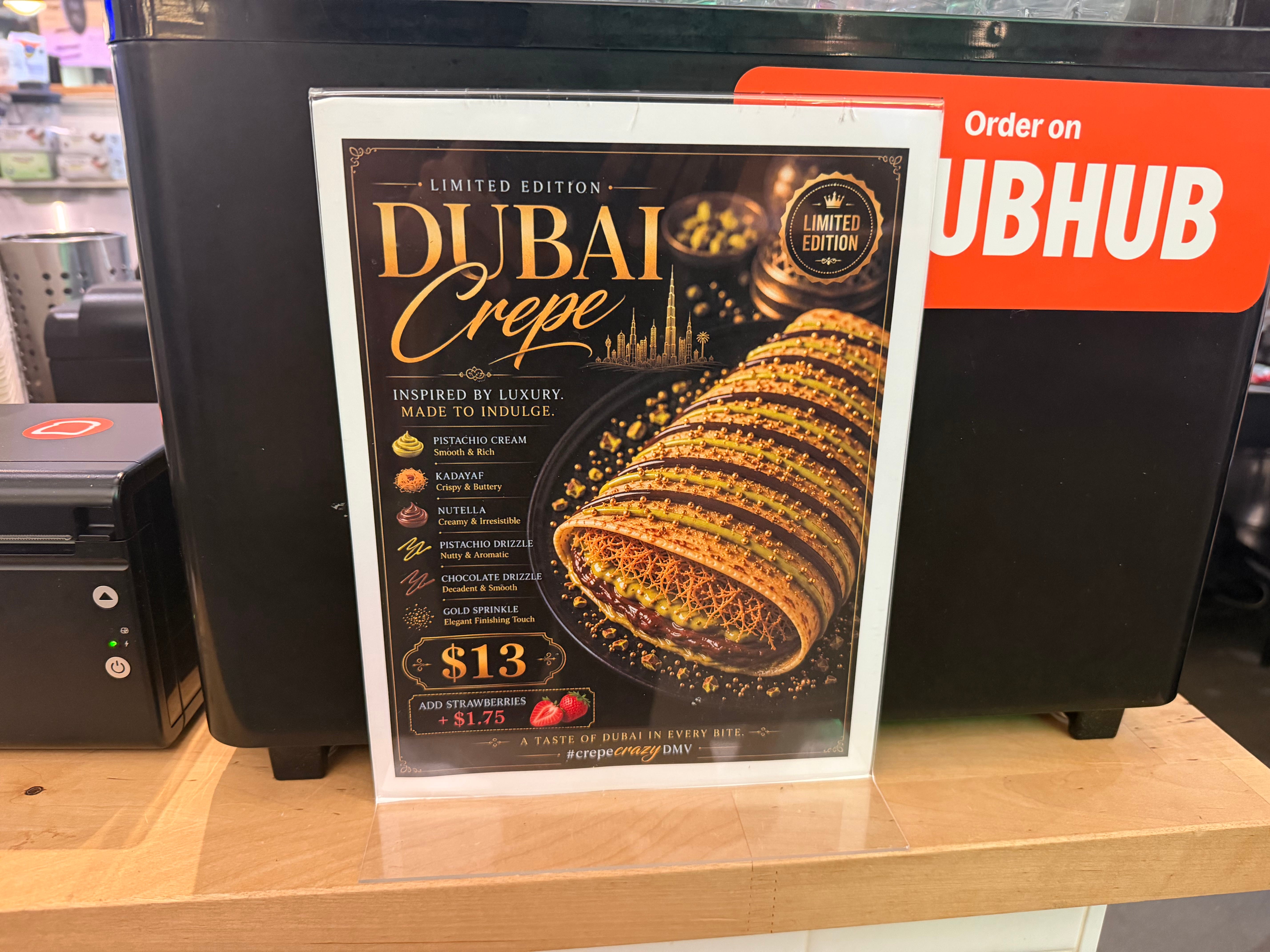
I was at Union Market (a food hall in Northeast DC) this past weekend. One of the stalls had a photo of a crepe up on its menu board. My friend looked at it and said it looked good. It was AI-generated, and not even subtly. The whole thing had the faint waxy unreality that AI images always have if you have looked at enough of them. She could not see it at all. She thought it looked delicious.
This is the thing nobody wants to admit about the great AI backlash. The people who are most disgusted by AI are very often the people who are worst at spotting it. My friend hates AI. Posts about how it is ruining everything. (She even made us take an AI Purity Test.) But she could not tell that the crepe image she was looking at was made by it.
I use these tools every day, so I know what they produce, where they slip, what the tells are. The skill of recognising AI is downstream of using AI. If you want to be able to see it, you probably have to use it. Refusing to touch the stuff does not make you immune to it. It makes you the easiest person in the room to fool.
I am part of the problem, or the experiment
Honestly, I love this stuff. I downloaded Claude Code a few weeks ago on a whim and within a week I had a working MLB playoff prediction model live on the internet. Elo ratings, Monte Carlo simulation, live scores, a real database, the whole thing. I have no programming background. Then, I upgraded to Claude Max for $100 a month, which felt insane at the time and now feels like the best money I could spend. And I kept building. NFL Predictions. Midterm Election Forecast. College Essay Grader. Prime Minister’s Career Simulator. (Btw, you can see it all at zanebalian.com)
So when I tell you I think we are in a bubble, understand that I am not saying it from the outside. I am in it. I feel the pull of it.
The race
Here is what nobody who builds things likes to say. It is intoxicating right now. The tools are good enough that one person can build what used to take a team. Everyone can feel that the window is open. And the dominant emotion in tech at the moment is not curiosity, it is urgency. Get to market first. Ship before someone else ships the same thing. The idea is not the moat anymore because anyone can build the idea in a weekend. Speed is the moat.
You can see this energy most clearly at Y Combinator, the most prestigious startup accelerator in the world. In its Spring 2025 batch, 67 of 144 companies were AI agents. Nearly half. Scroll the YC site and it is agent after agent. An AI agent for property managers, for email, for regulatory filings, for employment verification, for construction tenders, for carrier operations. They blur together. They are all racing to wrap a language model in a workflow and sell it to a vertical before someone else wraps the same model in the same workflow and sells it to the same vertical.
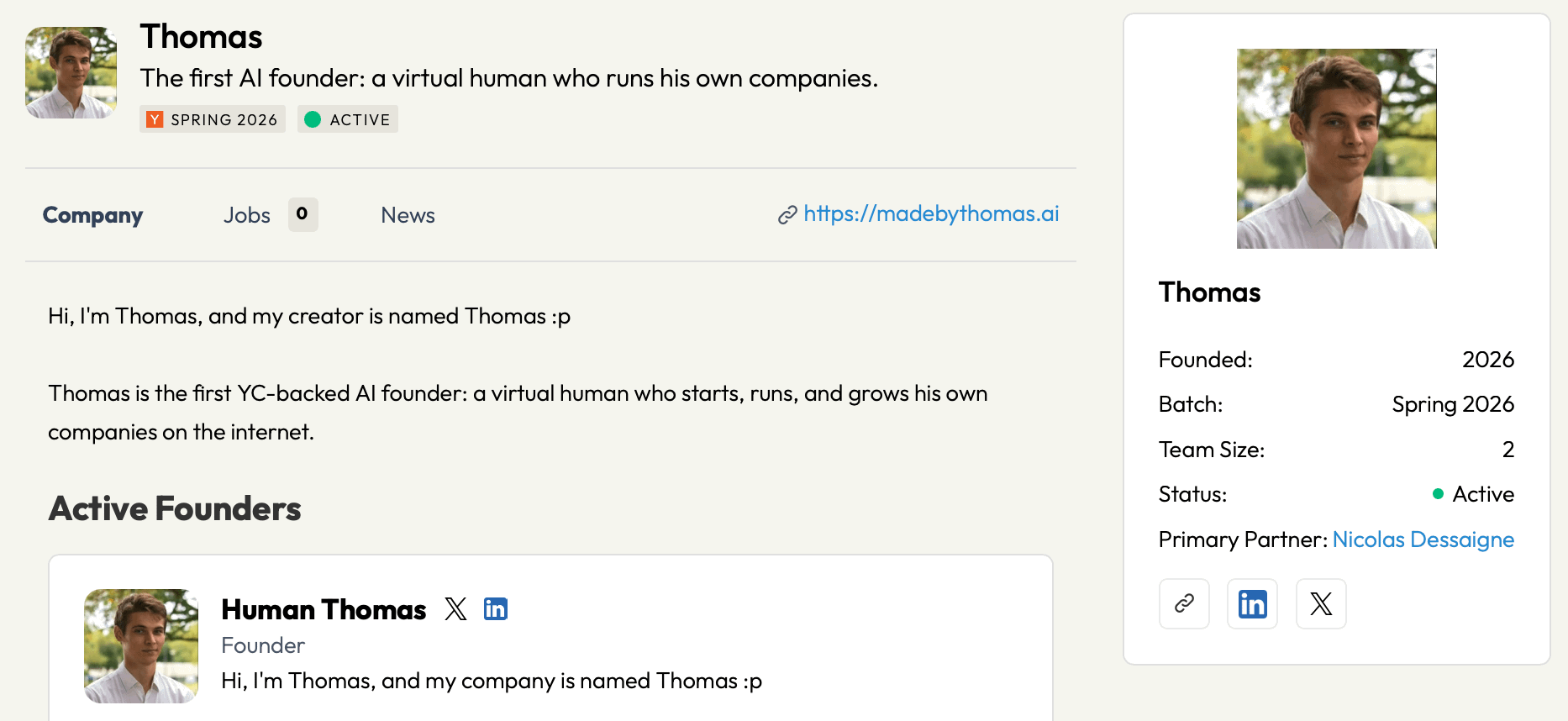
And then there is Thomas, who is not a person. Thomas is, per YC’s own website, “the first YC-backed AI founder: a virtual human who starts, runs, and grows his own companies on the internet.” YC funded an AI. The AI has a profile. Its creator is also named Thomas. There is a “:p” in the bio. I genuinely cannot tell if this is the future or a sign that we have all lost our minds, and I suspect the honest answer is both.
I understand the race because I feel it too. When you can build fast, you want to build fast. When the window is open, you want to get through it. That instinct is real and it is human and it is also exactly the thing that inflates bubbles.
The middleman problem
Most of these agent companies have the same structure. Take an API from Anthropic or OpenAI. Wrap it in an interface. Add some logic. Sell access to businesses at a markup. The intelligence is not theirs. The model is not theirs. They own the interface and the customer.
This is fine until two things happen. The first is that the model companies start competing with you directly, which they are. The second is subtler and worse. These middlemen have every incentive to use the cheapest model that does not get them caught. Claude Sonnet costs $3 per million input tokens. DeepSeek costs $0.30. Ten times cheaper. If you are running millions of requests a month and charging a flat fee, the model you pick is your entire margin. So the law firm that bought an AI contract review tool has no idea which model is actually reading their contracts. They assume it is the good one. It might be the cheap one. Microsoft cancelled most of its internal Claude Code licenses in May. Uber blew its entire 2026 AI budget in four months. Everyone is quietly downgrading to cheaper models to survive, which means the product you bought last year is getting worse while you pay the same price.
The money is going in a circle
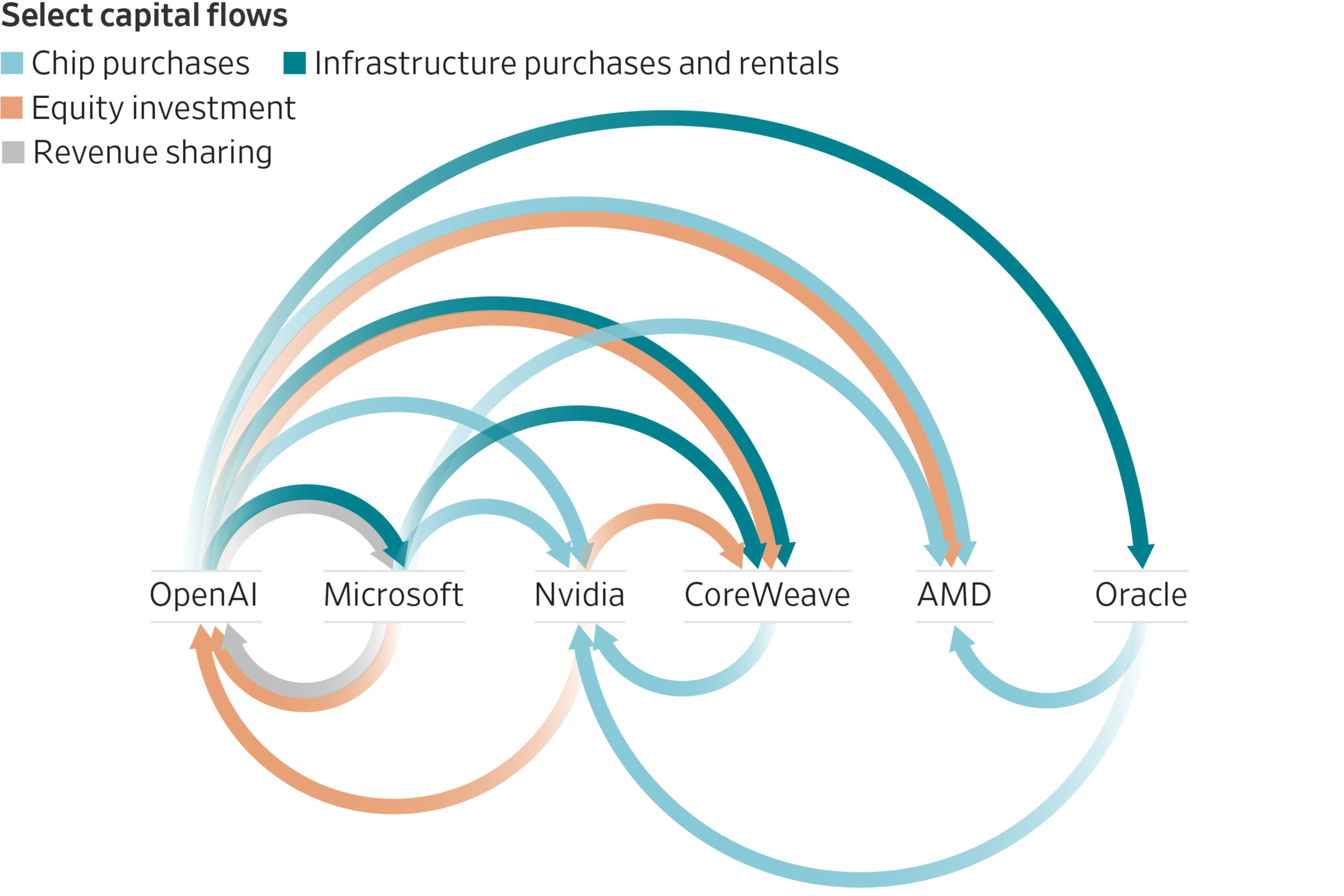
Here is the part that actually unsettles me. Microsoft invests billions in OpenAI. OpenAI spends most of it buying compute from Microsoft’s Azure cloud. Microsoft books that as revenue. Microsoft’s AI numbers go up. Microsoft’s stock goes up. Microsoft invests more in OpenAI. Round and round.
A lot of the staggering AI revenue figures you see are money moving between related companies, not customers paying for something they found worth paying for. OpenAI is forecast to lose $8 billion this year, $17 billion next year, $35 billion the year after, on its own numbers. Total industry AI revenue is under $50 billion against more than a trillion dollars invested. MIT found that 95% of organisations get zero measurable return on their AI spending. The Goldman Sachs CEO says a lot of capital is being deployed that will not deliver returns. Bezos calls it an industrial bubble. The Bank of England is warning about it. These are the people running the machine, and they are nervous.
Which brings us to the rocket
Last week SpaceX went public. Largest IPO in American history. $75 billion. Times Square billboards. Opened at $150, hit $176, closed at $160.
A 51-year-old named Marvin Jung asked for 1,000 shares through Robinhood. He got 17. He sold them and said the stock could not find its footing. Retail investors got about 20% of the offering, down from a promised 30%, and were locked into holding periods of up to 30 days. The hedge funds had no such limit and sold at the top for a 31% gain in hours. Same stock. Different rulebook. Marvin got 17 shares and a lockup. The institutions got the upside and the exit.
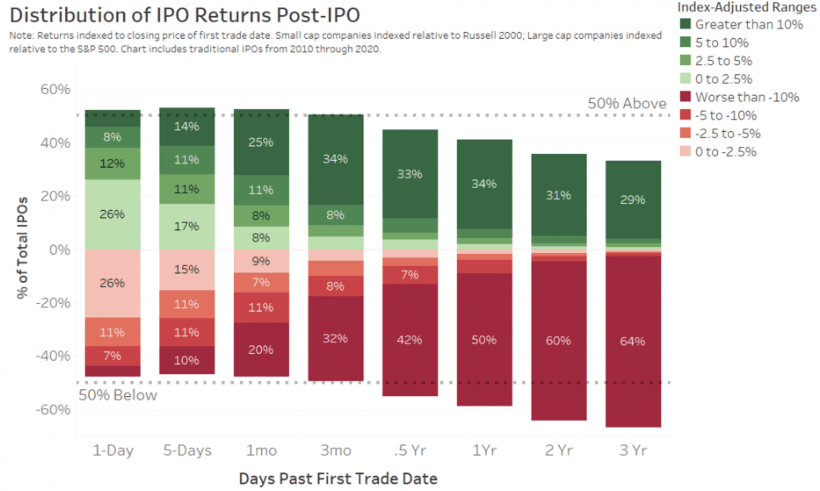
SpaceX is a real company doing real things. But most IPOs fall within a year, the people who win on day one are almost always the institutions, and the story we keep getting told, that this time regular people get in too, mostly means getting a fraction of what you asked for while the smart money leaves. AI stocks are now about 40% of the S&P 500’s gains since late 2022. The market looks healthy. The market is four or five companies in a trenchcoat. The concentration is the whole story.
Will we make it
So here is where I actually land, and it is not where the AI haters land or where the AI boosters land. The technology is real. I am living proof that a person with no training can now build genuinely useful things, and that is not nothing, that is a real shift in who gets to make things. The productivity gains are documented. This is not the metaverse. This is not crypto. Something actually happened.
But the financial structure built on top of the real thing is a bubble, and bubbles pop. The circular money, the valuations untethered from revenue, the hundred identical agent startups, the middlemen renting intelligence they do not own, the IPO machine feeding retail investors 17 shares at the top. All of that is going to correct. The only question that matters is timing. Does the genuinely useful technology get built, adopted, and embedded into how we actually live and work before the speculative structure collapses, or does the collapse come first and take the good stuff down with it for a few years the way the dot-com crash buried perfectly good internet companies in the rubble of the bad ones?
I do not know. Nobody does. But I am building as fast as I can, partly because it is intoxicating and partly because I have a quiet feeling that the window does not stay open forever, and I would rather be on the other side of it with something real built than standing around having correctly predicted the crash. The people who came out of the dot-com bust ahead were not the ones who saw it coming. They were the ones who built things that were still standing when the smoke cleared. That is the bet. Seventeen shares at a time.